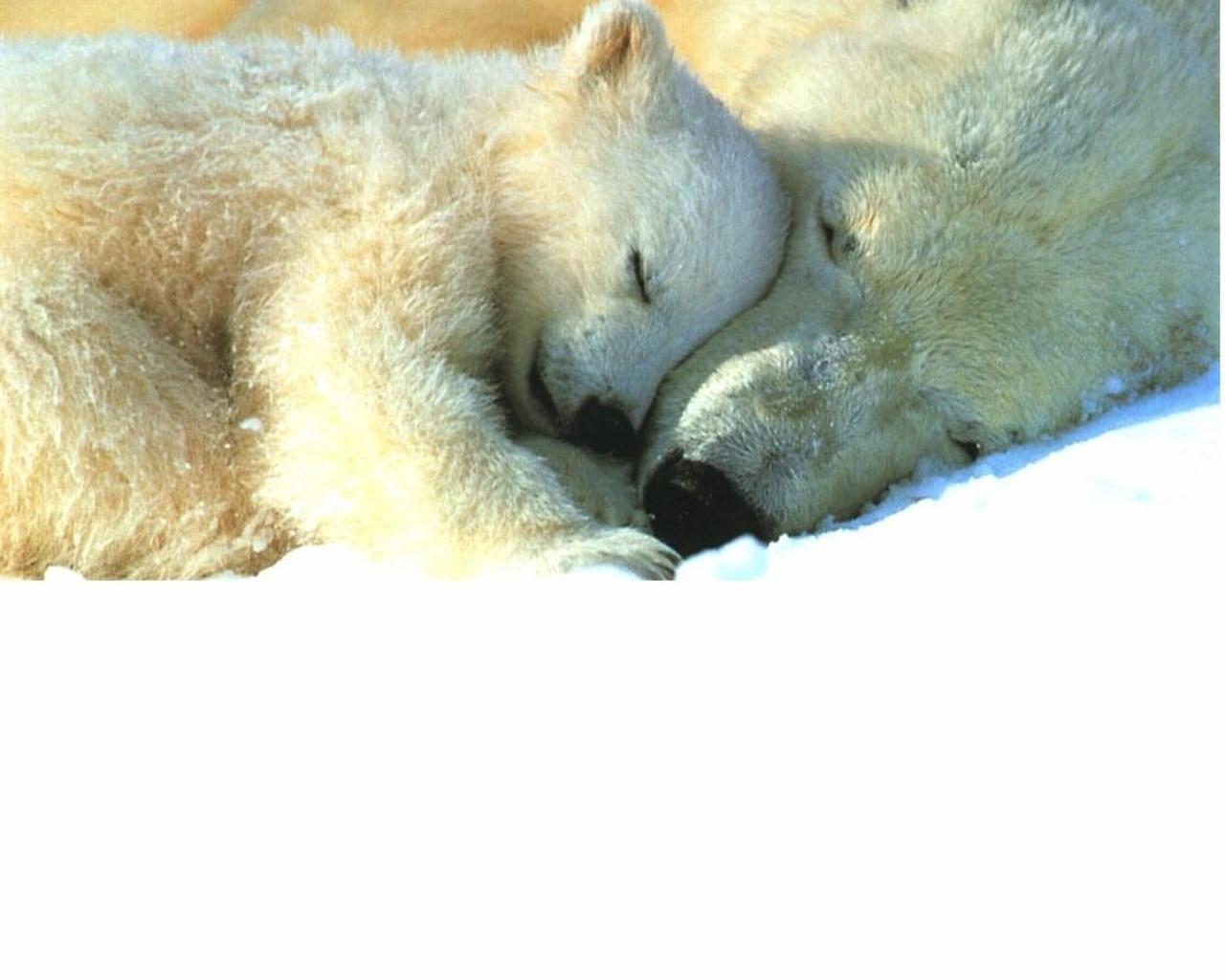
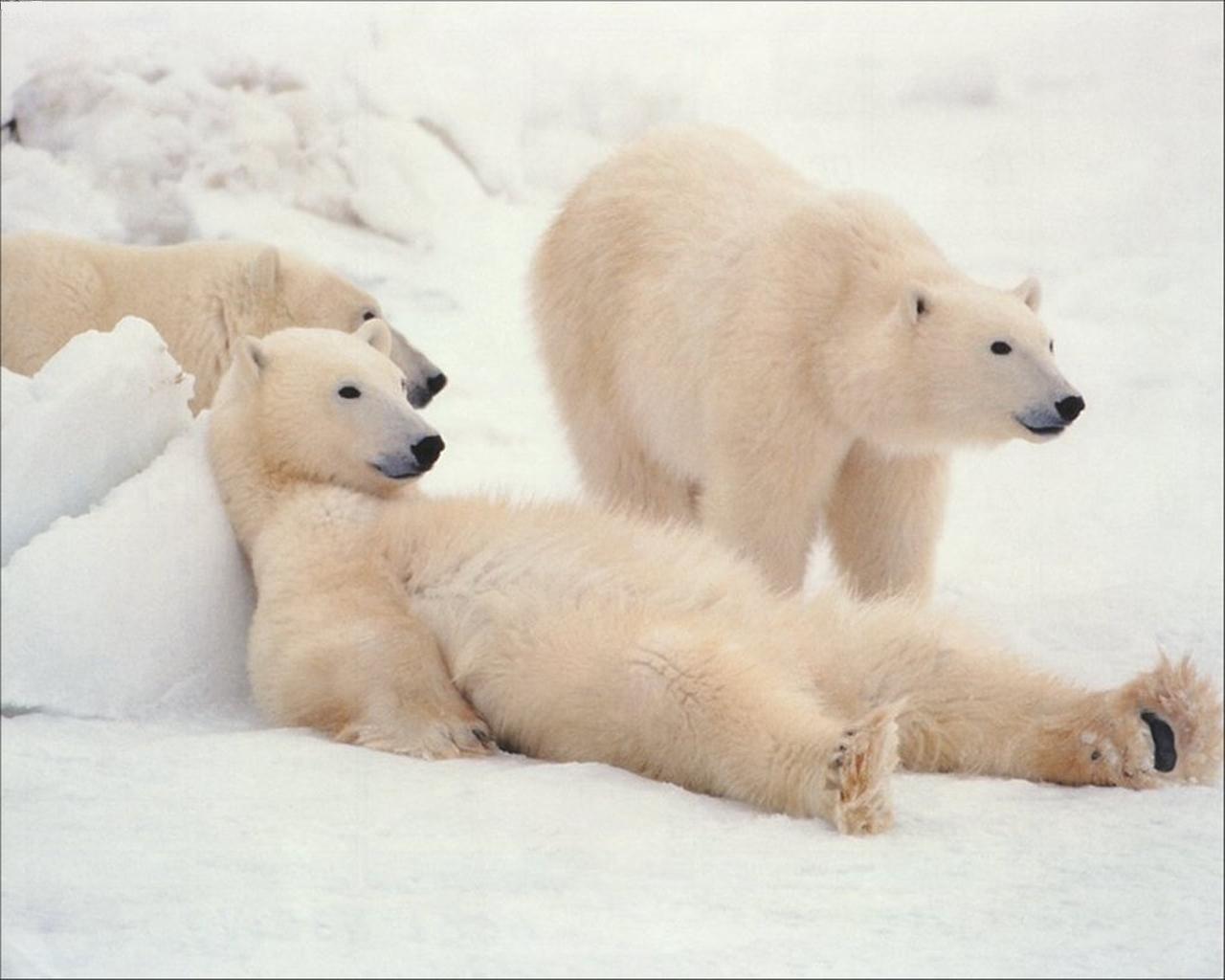
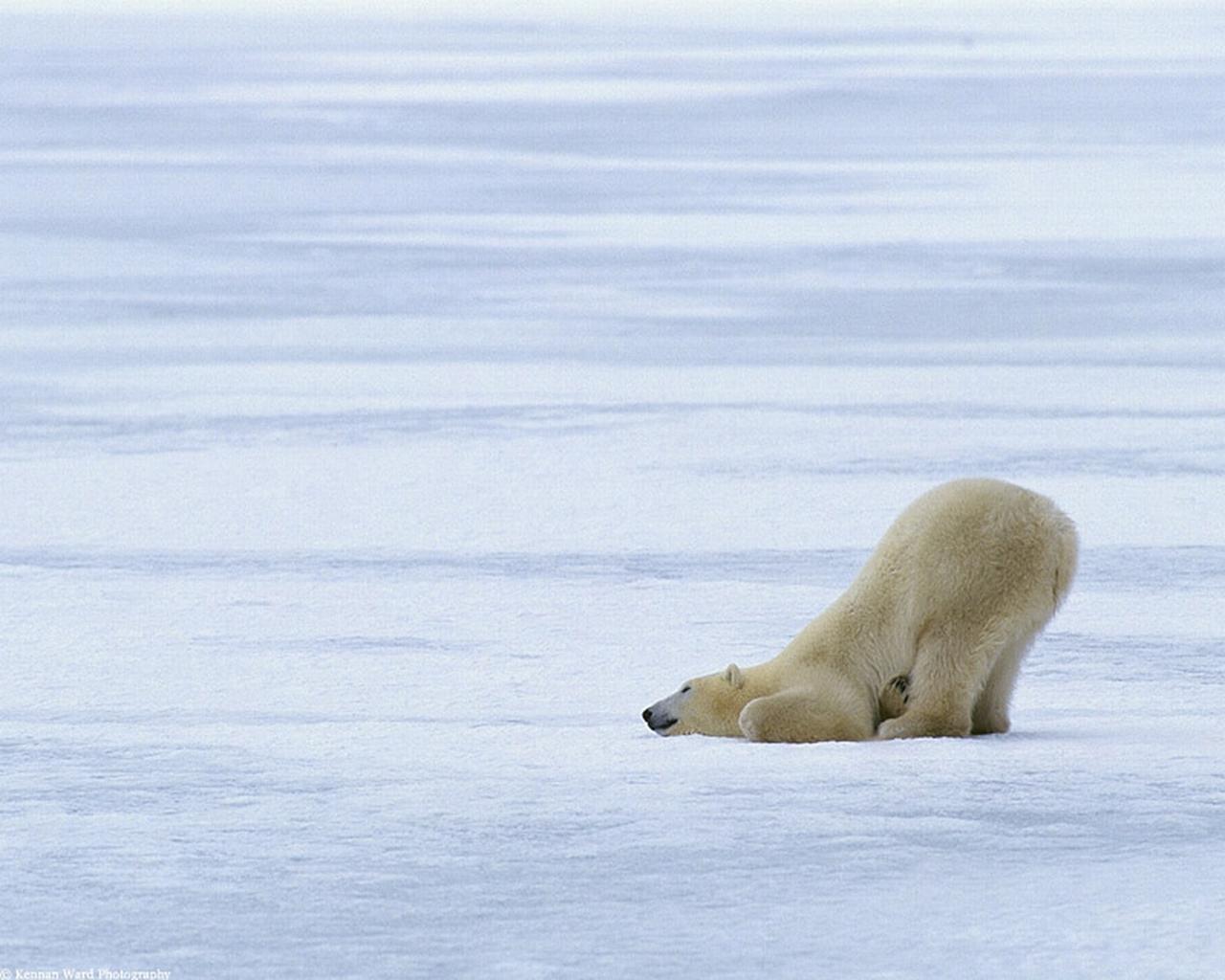
 The polar bear (Ursus maritimus) is a bear native to the Arctic. Polar bears and Kodiak bears are the world's largest land carnivores, with most adult males weighing 300-600 kg (660-1320 lb); adult females are about half the size of males. Its fur is hollow and translucent, but usually appears as white or cream colored, thus providing the animal with effective camouflage. Its skin is actually black in color. Its thick blubber and fur insulate it against the cold. The bear has a short tail and small ears that help reduce heat loss, as well as a relatively small head and long, tapered body to streamline it for swimming.
A semi-aquatic marine mammal, the polar bear has adapted for life on a combination of land, sea, and ice, and is the apex predator within its range. It feeds mainly on seals, young walruses, and whales, although it will eat anything it can kill.
A polar bear's fur provides camouflage and insulation. Although the fur appears white, in fact the individual hairs are translucent, like the water droplets that make up a cloud; the coat may yellow with age. Stiff hairs on the pads of a bear's paws provide insulation and traction on the ice.
Polar bears are enormous, aggressive, curious, and potentially dangerous to humans. Wild polar bears, unlike most other bears, are barely habituated to people and will quickly size up any animal they encounter as potential prey. Males are normally solitary except for mating season, and females are usually social towards one another. Despite a recurring internet meme that all polar bears are left-handed, there is no scientific evidence to support such a contention. Researchers studying polar bears have failed to find any evidence of left-handedness in all bears and one study of injury patterns in polar bear forelimbs found injuries to the right forelimb to be more frequent than those to the left, suggesting, perhaps, right-handedness.
Polar bears are excellent swimmers and have been seen in open Arctic waters as far as 60 miles (100 km) from land. In some cases they spend half their time on ice floes. Their 12 cm (5 in) layer of fat adds buoyancy in addition to insulating them from the cold. Recently, polar bears in the Arctic have undertaken longer than usual swims to find prey, resulting in four recorded drownings in the unusually large ice pack regression of 2005....(more on www.wikipedia.org)

 land carnivores. The grizzly bear (Ursus arctos horribilis), the Kodiak Bear (Ursus arctos middendorffi), and the Mexican brown bear are North American subspecies of the brown bear. However, DNA analysis has recently revealed that the identified subspecies of brown bears, both Eurasian and North American, are genetically quite homogeneous, and that their genetic phylogeography does not correspond to their traditional taxonomy.
