Showing posts with label P. Show all posts

Saturday, April 12, 2008

Penguins

Penguins are a group of aquatic, flightless birds living almost exclusively in the Southern Hemisphere. The number of penguin species is debated. Depending on which authority is followed, penguin biodiversity varies between 17 and 20 living species.

The largest living species is the Emperor Penguin, adults average about 1.1 m (3 ft 7 in) tall and weigh 35 kg (75 lb) or more. The smallest penguin species is the Little Blue Penguin (also known as the Fairy Penguin), which stands around 40 cm tall (16 in) and weighs 1 kg (2.2 lb).
Penguins are superbly adapted to an aquatic life. Their wings have become flippers, useless for flight in the air. In the water, however, penguins are astonishingly agile. Within the smooth plumage a layer of air is preserved, ensuring buoyancy. The air layer also helps insulate the birds in cold waters. On land, penguins use their tails and wings to maintain balance for their upright stance.

All penguins are countershaded - that is, they have a white underside and a dark (mostly black) upperside. This is for camouflage. A predator looking up from below (such as an orca or a leopard seal) has difficulty distinguishing between a white penguin belly and the reflective water surface. The dark plumage on their backs camouflages them from above.

Diving penguins reach 6 to 12 km/h (3.7 to 7.5 mph), though there are reports of velocities of 27 km/h (17 mph) (which are more realistic in the case of startled flight). The small penguins do not usually dive deep; they catch their prey near the surface in dives that normally last only one or two minutes. Larger penguins can dive deep in case of need. Dives of the large Emperor Penguin have been recorded which reach a depth of 565 m (1870 ft) and last up to 22 minutes.

Penguins form monogamous pairs for a breeding season, though the rate the same pair recouples varies drastically. Most penguins lay two eggs in a clutch, though the two largest species, the Emperor and the King Penguins, only lay one. The parents cooperate in caring for the clutch and the young. During the cold season on the other hand the mates separate for several months to protect the egg. Usually, the male stays with the egg and keeps it warm while the female goes to sea to find food for the baby. When the female comes back, they switch roles. Penguin eggs are smaller than any other bird species when compared proportionally to the weight of the parent birds; at 52 grams, the Little Penguin egg is 4.7 % of its mothers' weight, and the 450 gram Emperor Penguin egg is 2.3 %....(more on www.wikipedia.org)

Tuesday, December 18, 2007

Polar (White) Bear

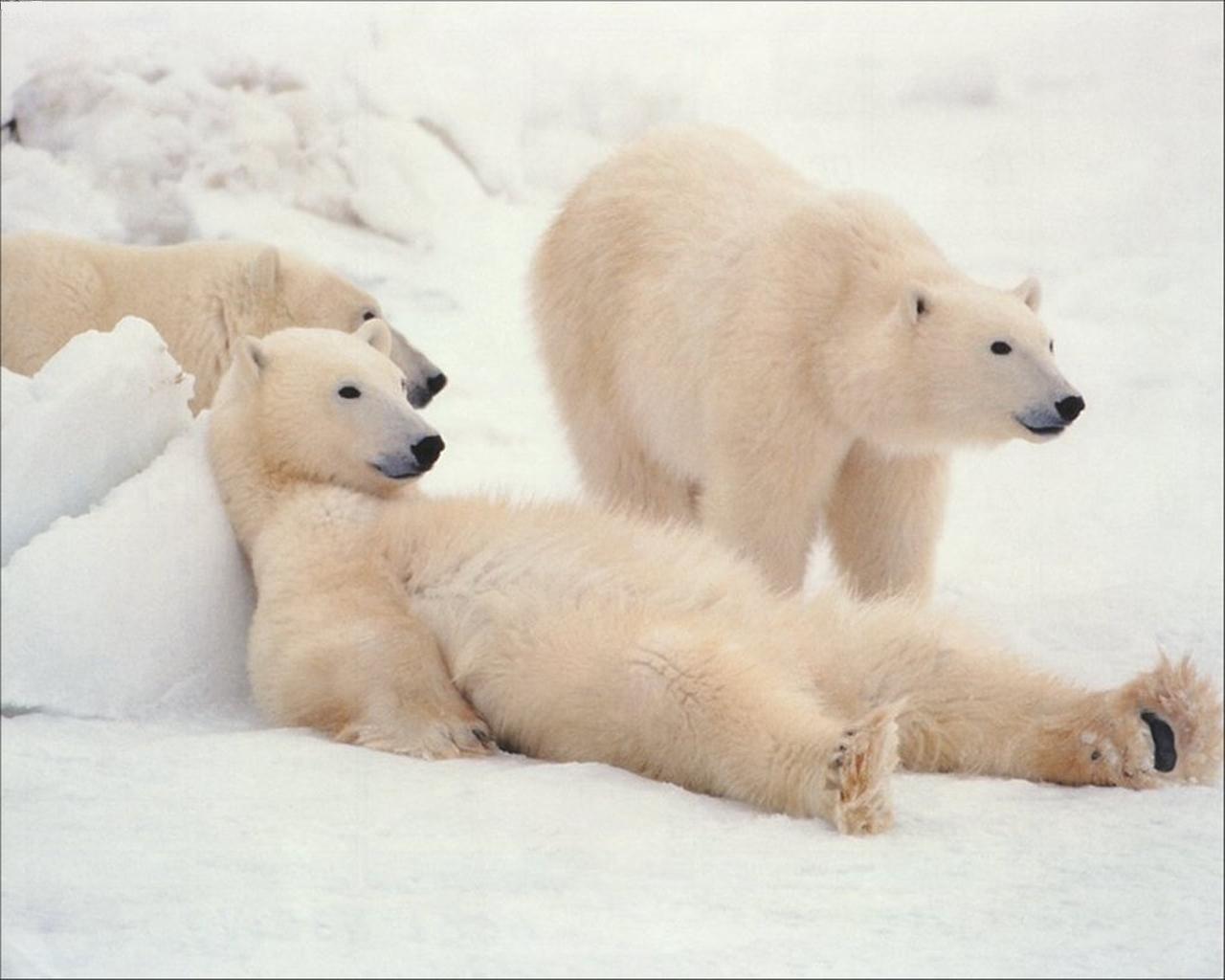
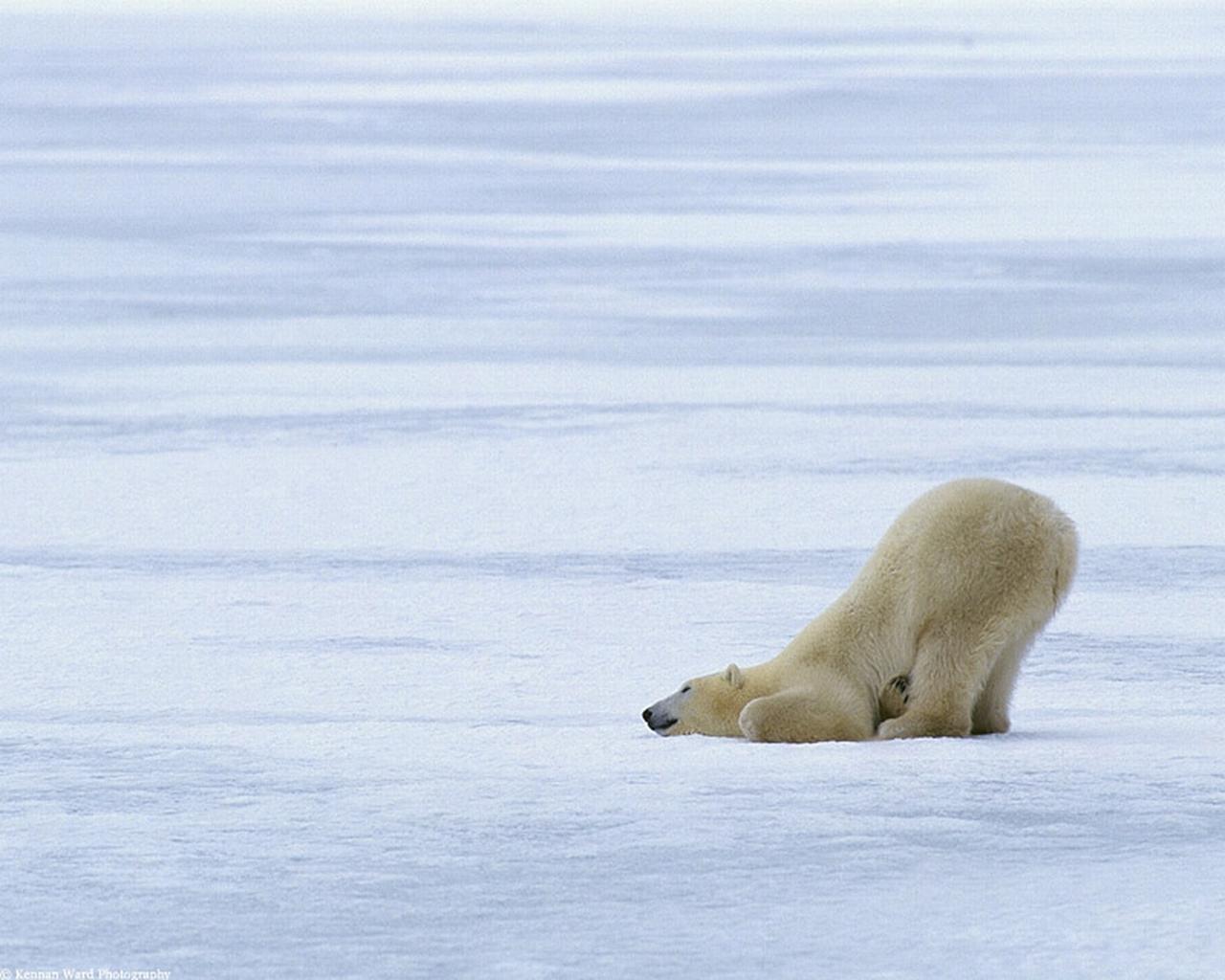
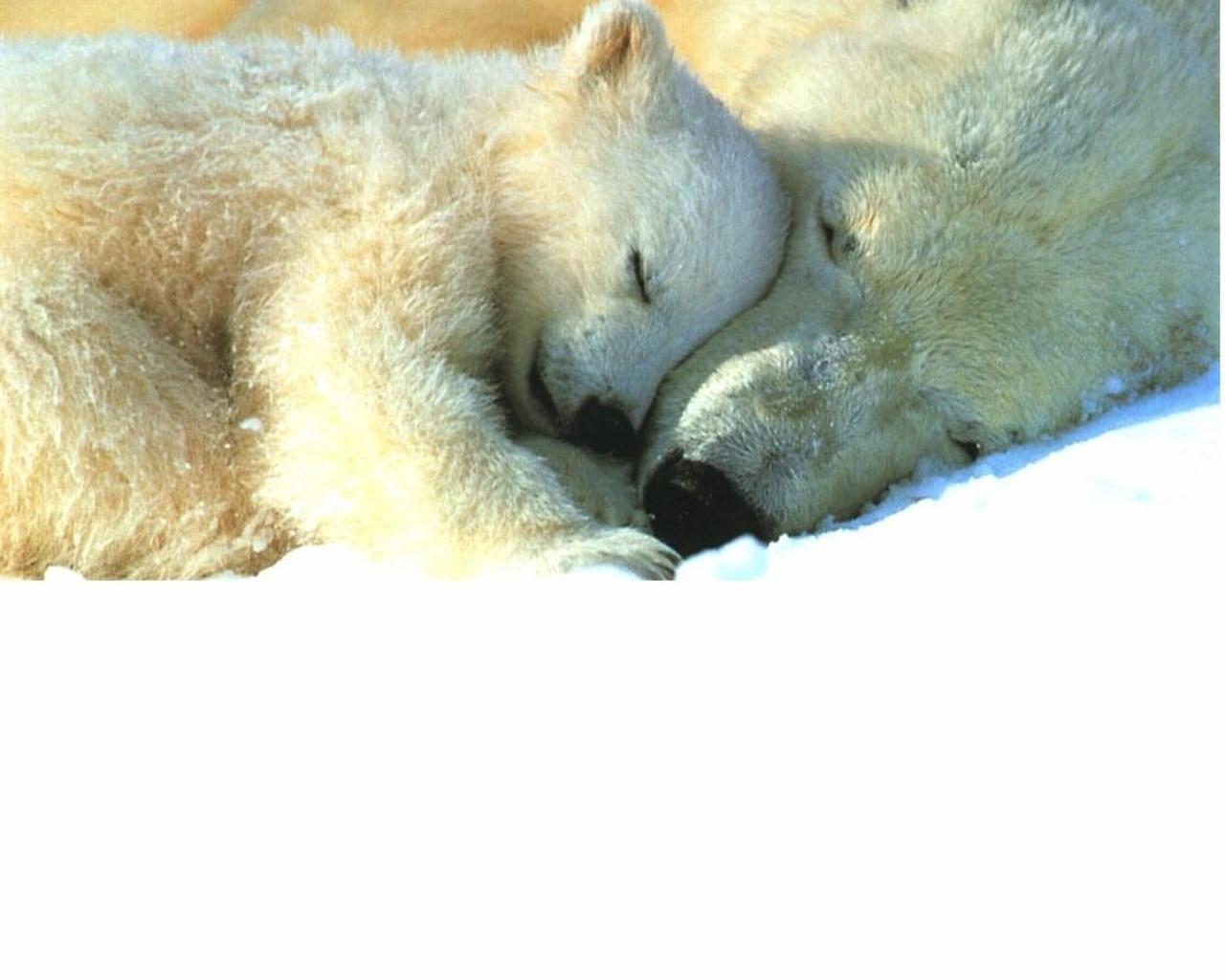
The polar bear (Ursus maritimus) is a bear native to the Arctic. Polar bears and Kodiak bears are the world's largest land carnivores, with most adult males weighing 300-600 kg (660-1320 lb); adult females are about half the size of males. Its fur is hollow and translucent, but usually appears as white or cream colored, thus providing the animal with effective camouflage. Its skin is actually black in color. Its thick blubber and fur insulate it against the cold. The bear has a short tail and small ears that help reduce heat loss, as well as a relatively small head and long, tapered body to streamline it for swimming.
A semi-aquatic marine mammal, the polar bear has adapted for life on a combination of land, sea, and ice, and is the apex predator within its range. It feeds mainly on seals, young walruses, and whales, although it will eat anything it can kill.
A polar bear's fur provides camouflage and insulation. Although the fur appears white, in fact the individual hairs are translucent, like the water droplets that make up a cloud; the coat may yellow with age. Stiff hairs on the pads of a bear's paws provide insulation and traction on the ice.
Polar bears are enormous, aggressive, curious, and potentially dangerous to humans. Wild polar bears, unlike most other bears, are barely habituated to people and will quickly size up any animal they encounter as potential prey. Males are normally solitary except for mating season, and females are usually social towards one another. Despite a recurring internet meme that all polar bears are left-handed, there is no scientific evidence to support such a contention. Researchers studying polar bears have failed to find any evidence of left-handedness in all bears and one study of injury patterns in polar bear forelimbs found injuries to the right forelimb to be more frequent than those to the left, suggesting, perhaps, right-handedness.
Polar bears are excellent swimmers and have been seen in open Arctic waters as far as 60 miles (100 km) from land. In some cases they spend half their time on ice floes. Their 12 cm (5 in) layer of fat adds buoyancy in addition to insulating them from the cold. Recently, polar bears in the Arctic have undertaken longer than usual swims to find prey, resulting in four recorded drownings in the unusually large ice pack regression of 2005....(more on www.wikipedia.org)

Monday, August 20, 2007

Giant Panda

The giant panda (Ailuropoda melanoleuca, Chinese Hanyu Pinyin: Dàxióngmāo) is a mammal classified in the bear family, Ursidae, native to central-western and southwestern China. It is easily recognized by its large, distinctive black patches around the eyes, over the ears, and across its round body. Though belonging to the order Carnivora, the panda has a diet which is 99% bamboo. Pandas may eat other foods such as honey, eggs, fish and yams.
The Giant Panda is an endangered animal; an estimated 2,000 pandas live in the wild and over 180 were reported to live in captivity by August 2006 in mainland China (another source by the end of 2006 put the figure for China at 221, with twenty pandas living outside of China. Reports show that the numbers of wild panda are on the rise.
The Giant Panda has a black-and-white coat. Adults measure around 1.5 m long and around 75 cm tall at the shoulder. Males can weigh up to 115 kg (253 pounds). Females are generally smaller than males, and can occasionally weigh up to 100 kg (220 pounds). Giant Pandas live in mountainous regions, such as Sichuan, Gansu, Shaanxi, and Tibet. While the Chinese dragon has been historically a national emblem for China, since the latter half of the 20th century the Giant Panda has also become a national emblem for China. Its image appears on a large number of modern Chinese commemorative silver, gold, and platinum coins....(more on wikipedia.org)
Posted by Picasa