Monday, September 1, 2008

Iguanas

Iguana is a genus of lizard native to tropical areas of Central and South America and the Caribbean first described by Austrian naturalist Josephus Nicolaus Laurenti in his book Specimen Medicum, Exhibens Synopsin Reptilium Emendatam cum Experimentis circa Venena in 1768. The genus iguana includes two species: the Green Iguana (a popular pet) and the Lesser Antillean Iguana.

Green Iguana

The two species of lizard within the genus Iguana possess a dewlap, a row of spines running down their back to their tail, and a third eye on their head. This eye is known as the Parietal eye, which looks just like a pale scale on the top of their head. Behind their neck are small scales which resemble spikes, known as tuberculate scales. They also have a large round scale on their cheek known as a subtympanic shield.(more on wikipedia.org)Baby Green Iguana

Saturday, April 12, 2008

Penguins

Penguins are a group of aquatic, flightless birds living almost exclusively in the Southern Hemisphere. The number of penguin species is debated. Depending on which authority is followed, penguin biodiversity varies between 17 and 20 living species.

The largest living species is the Emperor Penguin, adults average about 1.1 m (3 ft 7 in) tall and weigh 35 kg (75 lb) or more. The smallest penguin species is the Little Blue Penguin (also known as the Fairy Penguin), which stands around 40 cm tall (16 in) and weighs 1 kg (2.2 lb).
Penguins are superbly adapted to an aquatic life. Their wings have become flippers, useless for flight in the air. In the water, however, penguins are astonishingly agile. Within the smooth plumage a layer of air is preserved, ensuring buoyancy. The air layer also helps insulate the birds in cold waters. On land, penguins use their tails and wings to maintain balance for their upright stance.

All penguins are countershaded - that is, they have a white underside and a dark (mostly black) upperside. This is for camouflage. A predator looking up from below (such as an orca or a leopard seal) has difficulty distinguishing between a white penguin belly and the reflective water surface. The dark plumage on their backs camouflages them from above.

Diving penguins reach 6 to 12 km/h (3.7 to 7.5 mph), though there are reports of velocities of 27 km/h (17 mph) (which are more realistic in the case of startled flight). The small penguins do not usually dive deep; they catch their prey near the surface in dives that normally last only one or two minutes. Larger penguins can dive deep in case of need. Dives of the large Emperor Penguin have been recorded which reach a depth of 565 m (1870 ft) and last up to 22 minutes.

Penguins form monogamous pairs for a breeding season, though the rate the same pair recouples varies drastically. Most penguins lay two eggs in a clutch, though the two largest species, the Emperor and the King Penguins, only lay one. The parents cooperate in caring for the clutch and the young. During the cold season on the other hand the mates separate for several months to protect the egg. Usually, the male stays with the egg and keeps it warm while the female goes to sea to find food for the baby. When the female comes back, they switch roles. Penguin eggs are smaller than any other bird species when compared proportionally to the weight of the parent birds; at 52 grams, the Little Penguin egg is 4.7 % of its mothers' weight, and the 450 gram Emperor Penguin egg is 2.3 %....(more on www.wikipedia.org)

Saturday, March 29, 2008

Snow Leopard

The Snow Leopard (Uncia uncia),sometimes known as the ounce, is a large cat native to the mountain ranges of Central Asia from Afghanistan to Lake Baikal and eastern Tibet. The taxonomic position of this species has been subject to change. In the past, many taxonomists included the Snow Leopard in the genus Panthera, with several of the other largest felids, but later it was placed in its own genus, Uncia. However, a recent molecular study places the species firmly within the genus Panthera, although the exact position remains unclear. Along with the Clouded Leopard, it represents an intermediate between so-called big cats and smaller species, as it cannot roar, despite possessing an incomplete ossification of the hyoid bone, which was thought to be essential in allowing the big cats to roar. However, new studies show that the ability to roar is due to other morphological features, especially of the larynx, which are absent in the Snow Leopard. Well known for its beautiful fur, the Snow Leopard has a whitish-tan coat with ringed spots of dark, ashy-brown and rosettes of black. Its tail is heavy with fur and the bottom of its paws are covered with fur for protection against snow and cold.
A pair of Snow Leopards

The life span of a Snow Leopard is normally 15–18 years, but in captivity they can live up to 20 years.

Weighing usually 35 to 55 kilograms, the Snow Leopard is slightly smaller on average than a leopard. Exceptional large males can weigh up to 75 kg, very small females weigh only 25 kg.
The head and body length is 100 to 130 cm, the shoulder height is about 60 cm. The tail measures 80 to 100 cm and is proportionately longer than in any other cat species of comparable size. It helps to maintain its balance on the rugged terrain and unstable surfaces of its habitat and is used to cover its nose and mouth in very cold conditions. The head of the Snow Leopard is relatively small, however the male's head is usually much squarer and wider than that of the female. The big furry feet act as snowshoes, like those of the lynxes. The Snow Leopard has gray-and-white thick fur with numerous rosettes on the flanks and spots on the head and neck.(more on www.wikipedia.org)

Monday, January 7, 2008

Koalas


The Koala (Phascolarctos cinereus) is a thickset arboreal marsupial herbivore native to Australia, and the only extant representative of the family Phascolarctidae.
The Koala is found in coastal regions of eastern and southern Australia, from near Adelaide to the southern part of Cape York Peninsula. Populations also extend for considerable distances inland in regions with enough moisture to support suitable woodlands. The Koalas of South Australia were largely exterminated during the early part of the 20th century, but the state has since been repopulated with Victorian stock. The Koala is not found in Tasmania or Western Australia.

The word "koala" comes from the Dharuk word gula. Closely related words appear in other Australian Aboriginal languages, including:

  • The Ngunnawal of the Canberra region also call it gula.
  • In the Blue Mountains of New South Wales, Aborigines called Koalas by the word Cullawines.
  • In the Murray Region, Aborigines called Koalas by the word Karbors.
  • Other Aboriginal names for Koalas include: Bangaroos, Koolewongs, Narnagoons and Cholos.

It is commonly said that the common name 'Koala' is an Aboriginal word meaning "no drink" although there is no evidence to support this. Koalas do drink water, but only rarely, due to their diet consisting of eucalypt leaves, which contain sufficient water to obviate the need for the Koala to descend to ground level to drink.

The Koala is broadly similar in appearance to the wombats (the closest living relatives), but has a thicker, more luxurious coat, much larger ears, and longer limbs, which are equipped with large, sharp claws to assist with climbing. Weight varies from about 14 kg for a large, southern male, to about 5 kg for a small northern female. Contrary to popular belief, their fur is coarse, not soft and cuddly. Koalas' five digits are arranged with opposable thumbs, providing better gripping ability. The first two digits are position in apposition on the front paws, and the first three digits for the hind paws. The Koala is one of the few mammals (other than primates) that has fingerprints. In fact, koala fingerprints are remarkably similar to human fingerprints; even with an electron microscope, it can be quite difficult to distinguish between the two.

Females reach maturity at 2 to 3 years of age, males at 3 to 4 years. If healthy, a female Koala can produce one young each year for about 12 years. Gestation is 35 days; twins are very rare. Mating normally occurs between December and March, the Southern Hemisphere's summer.

A baby Koala is referred to as a joey and is hairless, blind, and earless. At birth the joey, only a quarter of an inch long, crawls into the downward-facing pouch on the mother's belly (which is closed by a drawstring-like muscle that the mother can tighten at will) and attaches itself to one of the two teats. Koalas retain the rearward-facing pouch of their terrestrial vomaboid ancestors. Young remain hidden in the pouch for about six months, only feeding on milk. During this time they grow ears, eyes, and fur. The joey then begins to explore outside of the pouch. At about this stage it begins to consume small quantities of the mother’s "pap" (formerly thought to be excrement, but now thought to come from the mother's caecum) in order to inoculate its gut with the microbes necessary to digest eucalypt leaves. The baby Koala will remain with the mother for another six months or so, riding on her back, and feeding on both milk and eucalypt leaves until weaning is complete at about 12 months of age. Young females disperse to nearby areas at that time; young males often stay in the mother's home range until they are two or three years old...(more on www.wikipedia.org)

Tuesday, December 18, 2007

Polar (White) Bear

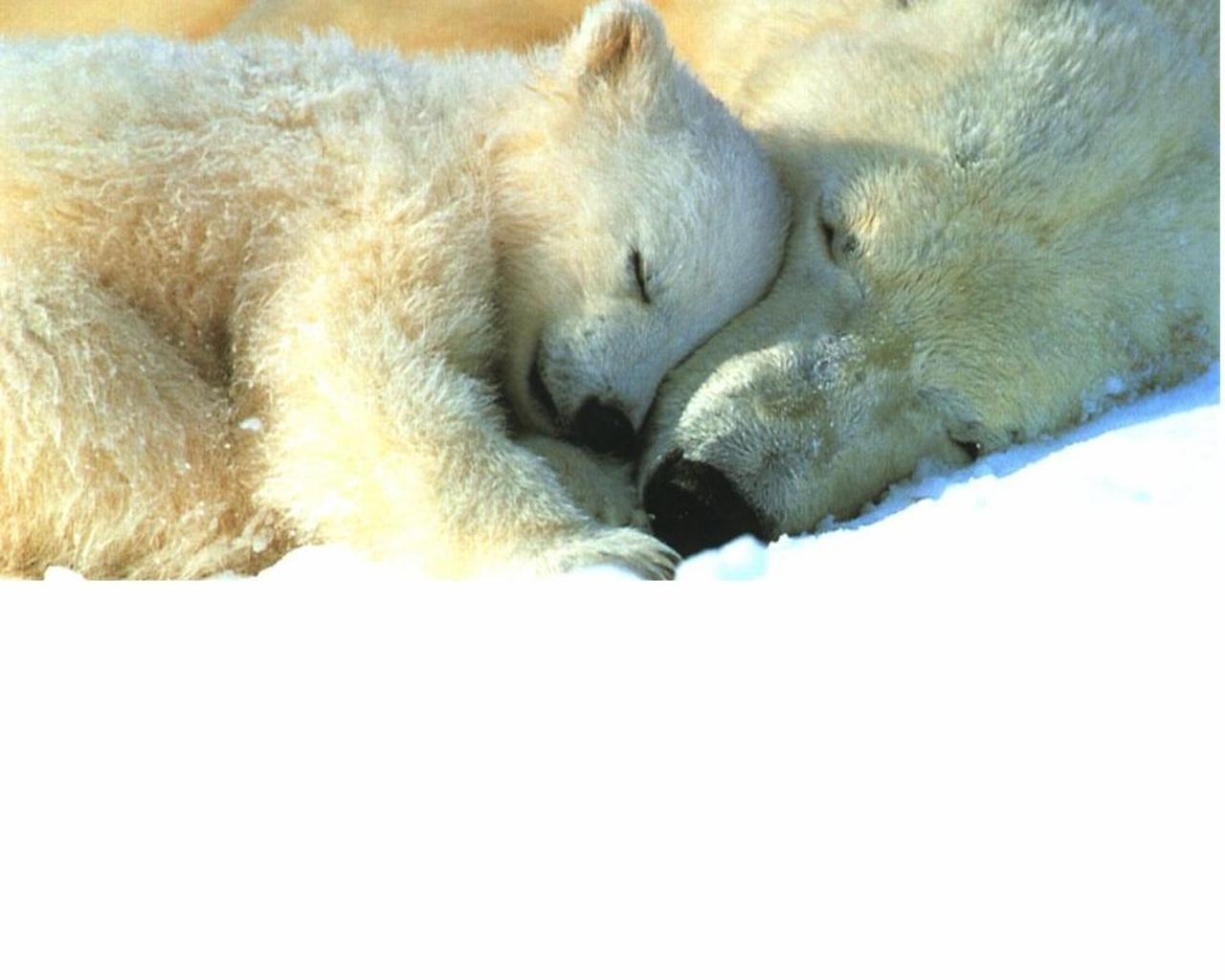
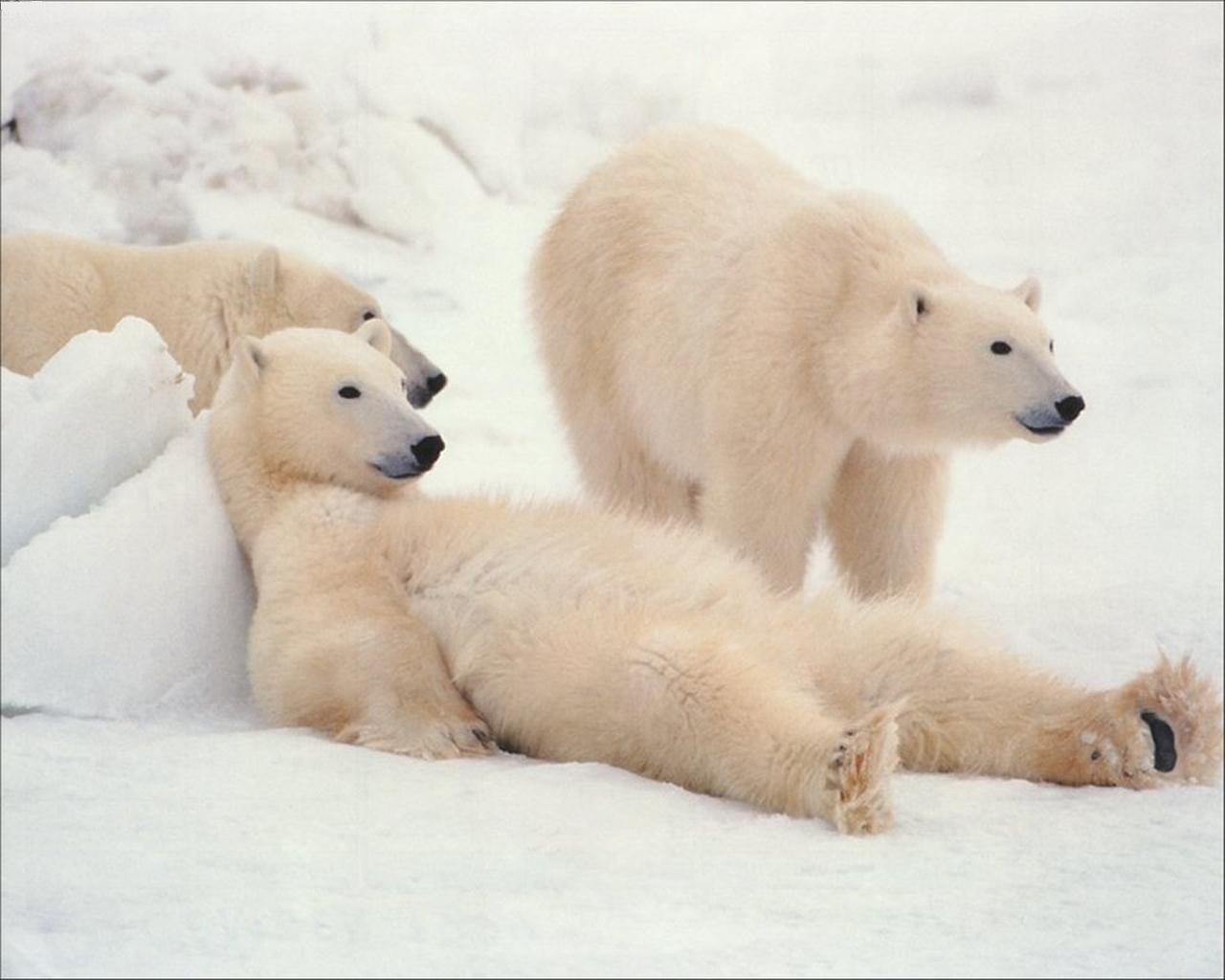
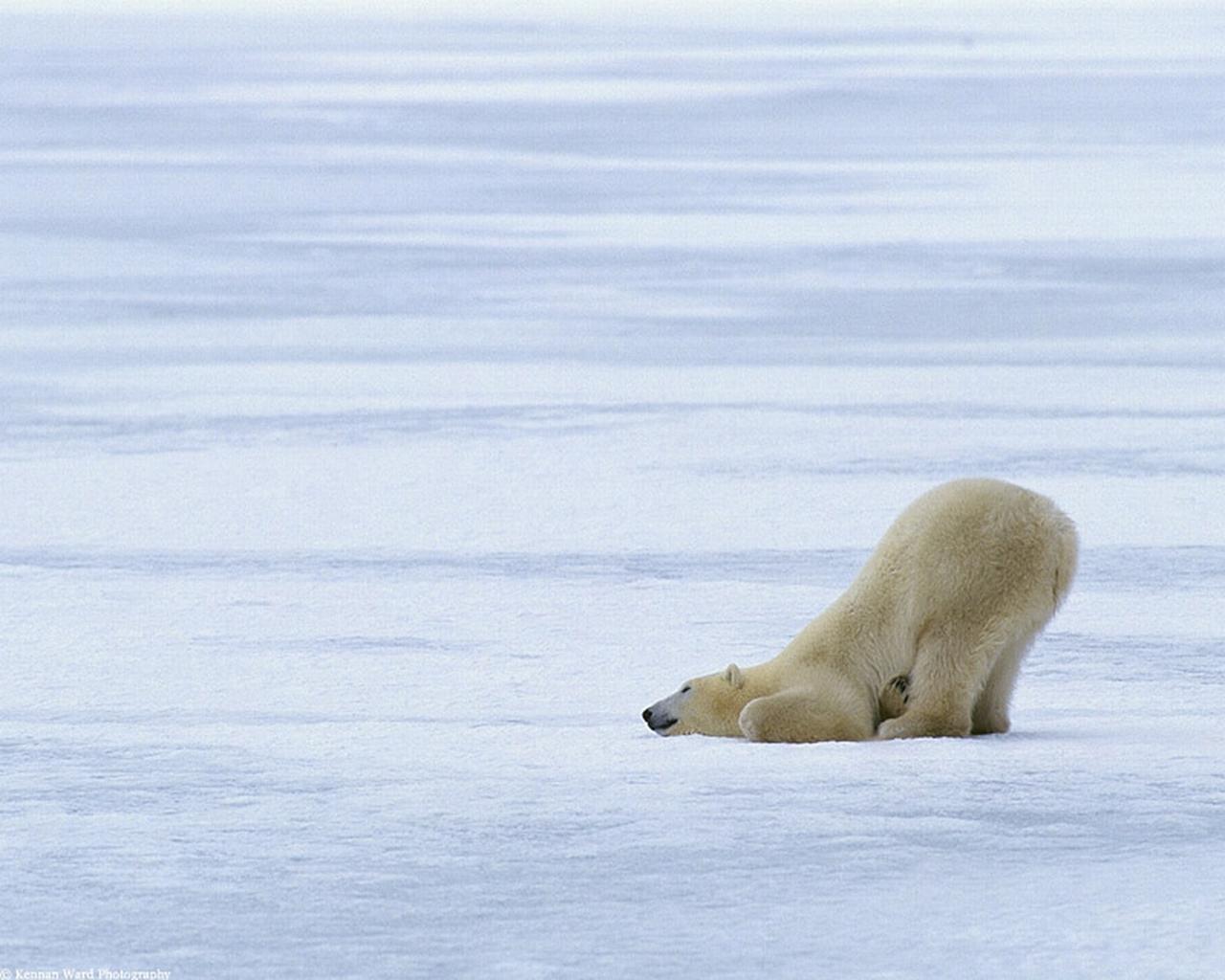
The polar bear (Ursus maritimus) is a bear native to the Arctic. Polar bears and Kodiak bears are the world's largest land carnivores, with most adult males weighing 300-600 kg (660-1320 lb); adult females are about half the size of males. Its fur is hollow and translucent, but usually appears as white or cream colored, thus providing the animal with effective camouflage. Its skin is actually black in color. Its thick blubber and fur insulate it against the cold. The bear has a short tail and small ears that help reduce heat loss, as well as a relatively small head and long, tapered body to streamline it for swimming.
A semi-aquatic marine mammal, the polar bear has adapted for life on a combination of land, sea, and ice, and is the apex predator within its range. It feeds mainly on seals, young walruses, and whales, although it will eat anything it can kill.
A polar bear's fur provides camouflage and insulation. Although the fur appears white, in fact the individual hairs are translucent, like the water droplets that make up a cloud; the coat may yellow with age. Stiff hairs on the pads of a bear's paws provide insulation and traction on the ice.
Polar bears are enormous, aggressive, curious, and potentially dangerous to humans. Wild polar bears, unlike most other bears, are barely habituated to people and will quickly size up any animal they encounter as potential prey. Males are normally solitary except for mating season, and females are usually social towards one another. Despite a recurring internet meme that all polar bears are left-handed, there is no scientific evidence to support such a contention. Researchers studying polar bears have failed to find any evidence of left-handedness in all bears and one study of injury patterns in polar bear forelimbs found injuries to the right forelimb to be more frequent than those to the left, suggesting, perhaps, right-handedness.
Polar bears are excellent swimmers and have been seen in open Arctic waters as far as 60 miles (100 km) from land. In some cases they spend half their time on ice floes. Their 12 cm (5 in) layer of fat adds buoyancy in addition to insulating them from the cold. Recently, polar bears in the Arctic have undertaken longer than usual swims to find prey, resulting in four recorded drownings in the unusually large ice pack regression of 2005....(more on www.wikipedia.org)

Thursday, December 6, 2007

Giraffe


The giraffe (Giraffa camelopardalis) is an African even-toed ungulate mammal, the tallest of all land-living animal species. Males can be 4.8 to 5.5 metres (16 to 18 feet) tall and weigh up to 1,360 kilograms (3,000 pounds). The record-sized bull was 5.87 m (19.2 feet) tall and weighed approximately 2,000 kg (4,400 lbs.). Females are generally slightly shorter and weigh less than the males do.

Male giraffes are around 16-19 feet (4.5-5.5 metres) tall at the horn tips, and weigh 1700-4200 lb. (770-1900 kg) Females are one to two feet (30-60 cm) shorter and weigh several hundred pounds less than males. Giraffes have spots covering their entire bodies, except their underbellies, with each giraffe having a unique pattern of spots.

Horns

Both sexes have horns, although the horns of a female are smaller. The prominent horns are formed from ossified cartilage and are called ossicones. The appearance of horns is a reliable method of identifying the sex of giraffes, with the females displaying tufts of hair on the top of the horns, where as males' horns tend to be bald on top — an effect of necking in combat. Males sometimes develop calcium deposits which form bumps on their skull as they age, which can give the appearance of up to three further horns.

Neck

Giraffes have long necks, which they use to browse the leaves of trees. They possess seven vertebrae in the neck (the usual number for a mammal) that are elongated. The vertebrae are separated by highly flexible joints. The base of the neck has spines which project upward and form a hump over the shoulders....(more on www.wikipedia.com)

Monday, December 3, 2007

Reindeer (Caribou)


The reindeer, known as caribou when wild in North America, is an Arctic and Subarctic-dwelling deer (Rangifer tarandus).
The name Caribou comes from Mi'kmaq qalipu, meaning "snow-shoveler", referring to its habit of pawing through the snow for food. In Inuktitut the caribou is known by the name tuttuk (Labrador dialect).
The reindeer is distributed throughout a number of northern locales. Reindeer are found in northern Scandinavia; at Spitsbergen; in European parts of Russia including northern Russia and Novaya Zemlya; in the Asian parts of Russia; northern Mongolia; northeastern China to the Pacific Ocean; in North America (where it is called the caribou); on Greenland, Canada and Alaska. Until the early 19th century it still occurred in southern Idaho.
The weight of a female varies between 60 and 170 kg (132 - 375 lb). In some subspecies of reindeer, the male is slightly larger; in others, the male can weigh up to 300 kg (661 lb). Both sexes grow antlers, which (in the Scandinavian variety) for old males fall off in December, for young males in the early spring, and for females, summer. The antlers typically have two separate groups of points (see image), a lower and upper. Domesticated reindeer are shorter-legged and heavier than their wild counterparts. The caribou of North America can run at speeds up to 80 km/h (50 MPH) and may travel 5,000 km (3,000 mi) in a year.
In the wild, most caribou migrate in large herds between their birthing habitat and their winter habitat. Their wide hooves help the animals move through snow and tundra; they also help propel the animal when it swims. About 1 million live in Alaska, and a comparable number live in northern Canada....(more on www.wikipedia.com)

Monday, November 26, 2007

Camels

Camels are even-toed ungulates within the genus Camelus. The dromedary, one-humped or Arabian camel has a single hump, and the Bactrian camel has two humps. They are native to the dry and desert areas of western Asia and East Africa, and central and east Asia, respectively.

The name camel comes to English via the Greek κάμηλος (kámēlos) from the Hebrew gamal or Arabic Jamal.

The average life expectancy of a camel is fifty to sixty years. The term camel is also used more broadly to describe any of the six camel-like creatures in the family Camelidae: the two true camels, and the four South American camelids, the llama, alpaca, guanaco, and vicuña.

A fully-grown adult camel stands 1.85 m/6 feet at the shoulder and 2.15 m/7 feet at the hump. The hump rises about thirty inches out of its body. Camels can run up to 40 mph (64 km/h) in short bursts and sustain speeds of up to 25 mph (40 km/h).

Humans first domesticated camels between 3,500–3,000 years ago. The dromedary and the Bactrian camel are both still used for milk, meat, and as beasts of burden—the dromedary in western Asia, and the Bactrian camel further to the north and east in central Asia.
Camels are well known for their humps. However, they do not store water in them as is commonly believed; their humps are actually a reservoir of fatty tissue. When this tissue is metabolized, it is only a source of energy, but would yield more than 1 g of water for each 1 g of fat converted through reaction with oxygen from the air. This process of fat metabolization generates a net loss of water through respiration for the oxygen required to convert the fat.
Camels are able to withstand changes in body temperature and water content that would kill most other animals. Their temperature ranges from 34 °C (93 °F) at night up to 41 °C (106 °F) during the day, and only above this threshold will they begin to sweat. The upper body temperature range is often not reached during the day in milder climatic conditions, and therefore, the camel may not sweat at all during the day. Evaporation of their sweat takes place at the skin level, not at the surface of their coat, thereby being very efficient at cooling the body compared to the amount of water lost through sweating. This ability to fluctuate body temperature and the efficiency of their sweating allows them to preserve about five litres of water a day.

A feature of their nostrils is that a large amount of water vapor in their exhalations is trapped and returned to their body fluids, thereby reducing the amount of water lost through respiration.

They can withstand at least 20-25% weight loss due to sweating (most mammals can only withstand about 3-4% dehydration before cardiac failure results from the thickened blood). A camel's blood remains hydrated, even though the body fluids are lost, until this 25% limit is reached.

Camels eating green herbage can ingest sufficient moisture in milder conditions to maintain their body's hydrated state without the need for drinking.

A camel's thick coat reflects sunlight. A shorn camel has to sweat 50% more to avoid overheating. It also insulates them from the intense heat that radiates from hot desert sand. Their long legs help by keeping them further from the hot ground. Camels have been known to swim.

Their mouth is very sturdy, able to chew thorny desert plants. Long eyelashes and ear hairs, together with sealable nostrils, form an effective barrier against sand. Their gait (moving both legs on one side at the same time) and their widened feet help them move without sinking into the sand....(more on www.wikipedia.com)

Monday, September 17, 2007

Alpacas

" A post in Honor of Life"
In California, in a little place called Lebec, there is a ranch. It's no ordinary ranch, I tell you , it's the Black Magic Alpaca Ranch owned by none other, but Rachelle Black. In August Rachelle had a newborn cria (alpaca baby), and she decided to make a contest of naming the baby. The rules were: it had to be a LOTR name. And we, the Tolkien fans put our minds at work and Mousie came up with Elbereth, Lady of the Stars.
photo by Rachelle Black: Elbereth
Visit Rachelle's blog the Pasture Musings.


Now let's see what Wikipedia says on Alpacas:

The Alpaca (Vicugna pacos) is a domesticated species of South American camelid developed from the wild alpacas. It resembles a sheep in appearance, but is larger and has a long erect neck as well as coming in many colors, whereas sheep are generally bred to be white and black.

Alpacas are kept in herds that graze on the level heights of the Andes of Ecuador, southern Peru, northern Bolivia, and northern Chile at an altitude of 3500 to 5000 meters above sea-level, throughout the year. Alpacas are considerably smaller than llamas, and unlike them are not used as beasts of burden but are valued only for their fiber. Alpacas only have fleece fibers, not woolen fibers, used for making knitted and woven items much as sheeps wool is. These items include blankets, sweaters, hats, gloves, scarves, a wide variety of textiles and ponchos in South America, and sweaters, socks and coats in other parts of the world. The fiber comes in more than 52 natural colors as classified in Peru, 12 as classified in Australia and 22 as classified in America. Alpacas and llamas differ in that llamas have banana shaped ears and long tails and alpacas have straight ears and stubby tails. Aside from these differences, llamas are on average 1-2 feet taller and proportionally bigger than alpacas.

Alpacas are social herd animals and should always be kept with others of their kind, or at the very least with other camelids. They are gentle, elegant, inquisitive, intelligent and observant. As they are a prey animal, they are cautious and nervous if they feel threatened. They like having their own space and may not like an unfamiliar alpaca or human getting close, especially from behind.Once they know their owners and feel confident around them, they may allow their backs and necks to be touched. They do not like being grabbed. Once socialized well, most alpacas tolerate being stroked or petted anywhere on their bodies, although many do not like their feet and lower legs handled....(more on www.wikipedia.org)


Wednesday, August 29, 2007

Brown Bear

The brown bear (Ursus arctos) is a species of bear distributed throughout the Northern hemisphere. Weighing up to 130–700 kg (290-1,500 pounds), the larger races of brown bear tie with the Polar bear as the largest extant land carnivores. The grizzly bear (Ursus arctos horribilis), the Kodiak Bear (Ursus arctos middendorffi), and the Mexican brown bear are North American subspecies of the brown bear. However, DNA analysis has recently revealed that the identified subspecies of brown bears, both Eurasian and North American, are genetically quite homogeneous, and that their genetic phylogeography does not correspond to their traditional taxonomy.
Brown Bears have furry coats in shades of blonde, brown, black, or a combination of those colors. The longer outer guard hairs of the brown bear are often tipped with white or silver, giving a "grizzled" appearance. They have a very short, stubby tail, just like all bears in the world. Brown bears have a large hump of muscle over their shoulders, which give strength to the forelimbs for digging. Bears are very powerful; even if considered pound for pound, a large specimen can break a neck or spine of a fully grown buffalo with a single blow. Forearms end in massive paws with very powerful claws up to 15 cm (5.9 inches) in length. Their heads are large and round with a concave facial profile. The normal range of physical dimensions for a brown bear is a head-and-body length of 1.7 to 2.8 m (5.6 to 9.2 feet) and a shoulder height 90 to 150 cm (35 to 59 inches), although the abnormally large specimens exceed these measurements. The smallest subspecies is the European brown bear, with mature females weighing as little as 90 kg (200 lb). The largest subspecies of the brown bear are the Kodiak bear and the bears from coastal Russia and Alaska. It is not unusual for large male Kodiak Bears to stand over 3 m (10 feet) while on their hind legs and to weigh about 680 kg (1,500 lb). Bears raised in zoos are often heavier than wild bears because of regular (sometimes excessive) feeding and limited movement. In zoos, bears may weigh up to 900 kilograms (2000 pounds), like the well-known "Goliath" from New Jersey's Space Farms Zoo and Museum. According to the Great Bear Almanac, one of the well known books about bears, the largest Kodiak bear weighed close to 2400 pounds.
In spite of their size, some have been clocked at speeds in excess of 56 km/h (35 mph). Along with their strength and deceptive speed, brown bears are legendary for their stamina. They are capable of running at full speed for miles at a time without stopping....(more on www.wikipedia.com)
Posted by Picasa

Sunday, August 26, 2007

Kangaroo

A kangaroo is a marsupial from the family Macropodidae. In common use the term is used to describe the largest species from this family, the Red Kangaroo, the Antilopine Kangaroo, and the Eastern and Western Grey Kangaroo of the Macropus genus.
The word kangaroo derives from the Guugu Yimidhirr word gangurru, referring to a grey kangaroo.The name was first recorded as "Kangooroo or Kanguru" on 4 August 1770, by Lieutenant (later Captain) James Cook on the banks of the Endeavour River at the site of modern Cooktown, when HM Bark Endeavour was beached for almost seven weeks to repair damage sustained on the Great Barrier Reef.
A common legend about the kangaroo's English name is that it came from the Aboriginal words for "I don't understand you." According to this legend, Captain James Cook and naturalist Sir Joseph Banks were exploring Australia when they happened upon the animal. They asked a nearby local what the creatures were called. The local responded "Kangaroo", meaning "I don't understand you", which Cook took to be the name of the creature.
Europeans have long regarded Kangaroos as strange animals. Early explorers described them as creatures that had heads like deer (without antlers), stood upright like men, and hopped like frogs. Combined with the two-headed appearance of a mother kangaroo, this led many back home to dismiss them as travellers' tales for quite some time.
Kangaroos are the only large animals to use hopping as a means of locomotion. The comfortable hopping speed for Red Kangaroo is about 20–25 km/h (13–16 mph), but speeds of up to 70 km/h (44 mph) can be attained, over short distances, while it can sustain a speed of 40 km/h (25 mph) for nearly two kilometres. This fast and energy-efficient method of travel has evolved because of the need to regularly cover large distances in search of food and water, rather than the need to escape predators.
Because of its long feet, it cannot walk normally. To move at slow speeds, it uses its tail to form a tripod with its two forelimbs. It then raises its hind feet forward, in a form of locomotion called "crawl-walking."
The average life expectancy of a kangaroo is about 4–6 years, with some living until they are about 23.... (more on www.wikipedia.org)
Posted by Picasa

Saturday, August 25, 2007

Humpback Whale

The Humpback Whale (Megaptera novaeangliae) is a baleen whale. One of the larger rorqual species, adults range in length from 12–16 metres (40–50 ft) and weigh approximately 36,000 kilograms (79,000 lb). The Humpback has a distinctive body shape, with unusually long pectoral fins and a knobbly head. It is an acrobatic animal, often breaching and slapping the water. Males produce a complex whale song, which lasts for 10 to 20 minutes and is repeated for hours at a time. The purpose of the song is not yet clear, although it appears to have a role in mating.
Found in oceans and seas around the world, Humpback Whales typically migrate up to 25,000 kilometres each year. Humpbacks feed only in summer, in polar waters, and migrate to tropical or sub-tropical waters to breed and give birth in the winter. During the winter, Humpbacks fast and live off their fat reserves. The species' diet consists mostly of krill and small fish. Humpbacks have a diverse repertoire of feeding methods, including the spectacular bubble net fishing technique.
Like other large whales, the Humpback was a target for the whaling industry, and its population fell by an estimated 90% before a whaling moratorium was introduced in 1966. Stocks of the species have since partially recovered, however entanglement in fishing gear, collisions with ships, and noise pollution are ongoing concerns. Current estimates for the abundance of Humpback Whales range from about 30,000 to 60,000, approximately one third of pre-whaling levels. Once hunted to the brink of extinction, Humpbacks are now sought out by whale-watchers, particularly off parts of Australia and the United States.... (more on wikipedia.org)
Posted by Picasa

Thursday, August 23, 2007

Toco Toucan

The Toco Toucan (Ramphastos toco) is the largest and arguably best known species in the toucan family. It is found in semi-open habitats throughout a large part of central and eastern South America. It is a common attraction in zoos.
The Toco Toucan eats mainly fruit (e.g. figs and Passiflora edulis) using its bill to pluck them from trees, but also insects, and nestlings and eggs of birds. Has been known to capture and eat small adult birds in captivity. The long bill is useful for reaching things that otherwise would be out-of-reach. It is also used to skin fruit and scare off predators. It is typically seen in pairs or small family-groups. In flight it alternates between a burst of rapid flaps with the relatively short, rounded wings and gliding. Nesting is seasonal, but timing differ between regions. The nest is typically placed high in a tree and consists of a cavity; at least part of which is excavated by the parent birds themselves. It has also been recorded nesting in holes in earth-bank and terrestrial termite-nest. Their reproduction cycle is annual. The female usually lays two to four eggs a few days after mating. The eggs are incubated by both sexes and hatch after 17-18 days. These birds are very protective of themselves and of their babies.
The Toco Toucans can become pets if taken from the nest and hand reared as babies. Their requirements are specific but basic, and must be strictly adhered to. Requirements include items such as spacious cages to move about because of their active nature, and toys in their cage to provide mental stimulation. They have an almost exclusive frugivorous (fruit) diet; with that diet comes a sensitivity to hemochromatosis (iron storage disease) which can make them difficult for the novice keeper to maintain. When provided with these things they make wonderful affectionate pets and can be quite hardy in a captive environment. The record for captive longevity is 26 years.... (more on wikipedia.org)
Posted by Picasa

Monday, August 20, 2007

Giant Panda

The giant panda (Ailuropoda melanoleuca, Chinese Hanyu Pinyin: Dàxióngmāo) is a mammal classified in the bear family, Ursidae, native to central-western and southwestern China. It is easily recognized by its large, distinctive black patches around the eyes, over the ears, and across its round body. Though belonging to the order Carnivora, the panda has a diet which is 99% bamboo. Pandas may eat other foods such as honey, eggs, fish and yams.
The Giant Panda is an endangered animal; an estimated 2,000 pandas live in the wild and over 180 were reported to live in captivity by August 2006 in mainland China (another source by the end of 2006 put the figure for China at 221, with twenty pandas living outside of China. Reports show that the numbers of wild panda are on the rise.
The Giant Panda has a black-and-white coat. Adults measure around 1.5 m long and around 75 cm tall at the shoulder. Males can weigh up to 115 kg (253 pounds). Females are generally smaller than males, and can occasionally weigh up to 100 kg (220 pounds). Giant Pandas live in mountainous regions, such as Sichuan, Gansu, Shaanxi, and Tibet. While the Chinese dragon has been historically a national emblem for China, since the latter half of the 20th century the Giant Panda has also become a national emblem for China. Its image appears on a large number of modern Chinese commemorative silver, gold, and platinum coins....(more on wikipedia.org)
Posted by Picasa

Sunday, August 19, 2007

Raccoon

A raccoon (or racoon) is any one of three species of nocturnal mammal which constitute the genus Procyon of the Procyonidae family. The most widespread species, the Common Raccoon, is often known simply as "the" raccoon, as the two other raccoon species in the genus are native only to the tropics and are considerably lesser-known. Genetic studies have shown that the closest relatives of the raccoon are the ringtails and cacomistles.
Although there is some variation depending on the species in question, raccoons range from 20-40 inches (51-102 cm) in length (including the tail) and weigh between 10 and 35 lbs (4.5-16 Kg). The raccoon's tail ranges from 8 to 16 inches (20-40 cm) in length. Male raccoons are generally larger than females. A baby raccoon is called a kit.
Raccoons can live up to 16 years in the wild, though most do not make it through their second year. A raccoon that survives past its youth will live an average of 5 years. Primary causes of mortality include humans (hunting, trapping, cars) and malnutrition.
Raccoons are unusual, for their thumbs (though not opposable) enable them to open many closed containers (such as garbage cans and doors). They are omnivores with a reputation for being clever and mischievous; their intelligence and dexterity equip them to survive in a wide range of environments and are one of the few medium-to-large-sized animals that have enlarged its range since human encroachment began (another is the coyote). Raccoon hindfeet are plantigrade similar to a human's. Raccoons are sometimes considered vermin or a nuisance, and are common in campgrounds of North America, especially in the Midwest.
Many people are surprised when a creature that they usually think of as cute or cuddly raids their campsite at night and makes odd growls and fights viciously over scraps of food left out by campers.... (more on wikipedia.org)
Posted by Picasa

Friday, August 17, 2007

Alpine Marmot


The Alpine Marmot (Marmota marmota) is a species of marmot found in mountainous areas of central and southern Europe. Alpine Marmots live at heights between 800 and 3,200 metres, in the Alps, Tatras, the Pyrenees and Mount Baldo by the Riva del Garda, Italy. They were reintroduced with success in the Pyrenees in 1948, where the Alpine Marmot had disappeared at end of the Pleistocene epoch. They are excellent diggers, able to penetrate soil that even a pickaxe would have difficulty with, and spend up to nine months per year in hibernation. An adult Alpine Marmot may weigh between 4 and 8 kg and reach between 42–54 cm in length (not including the tail, which measures between 13–16 cm on average). This makes the Alpine Marmot the largest squirrel species.... www.wikipedia.org